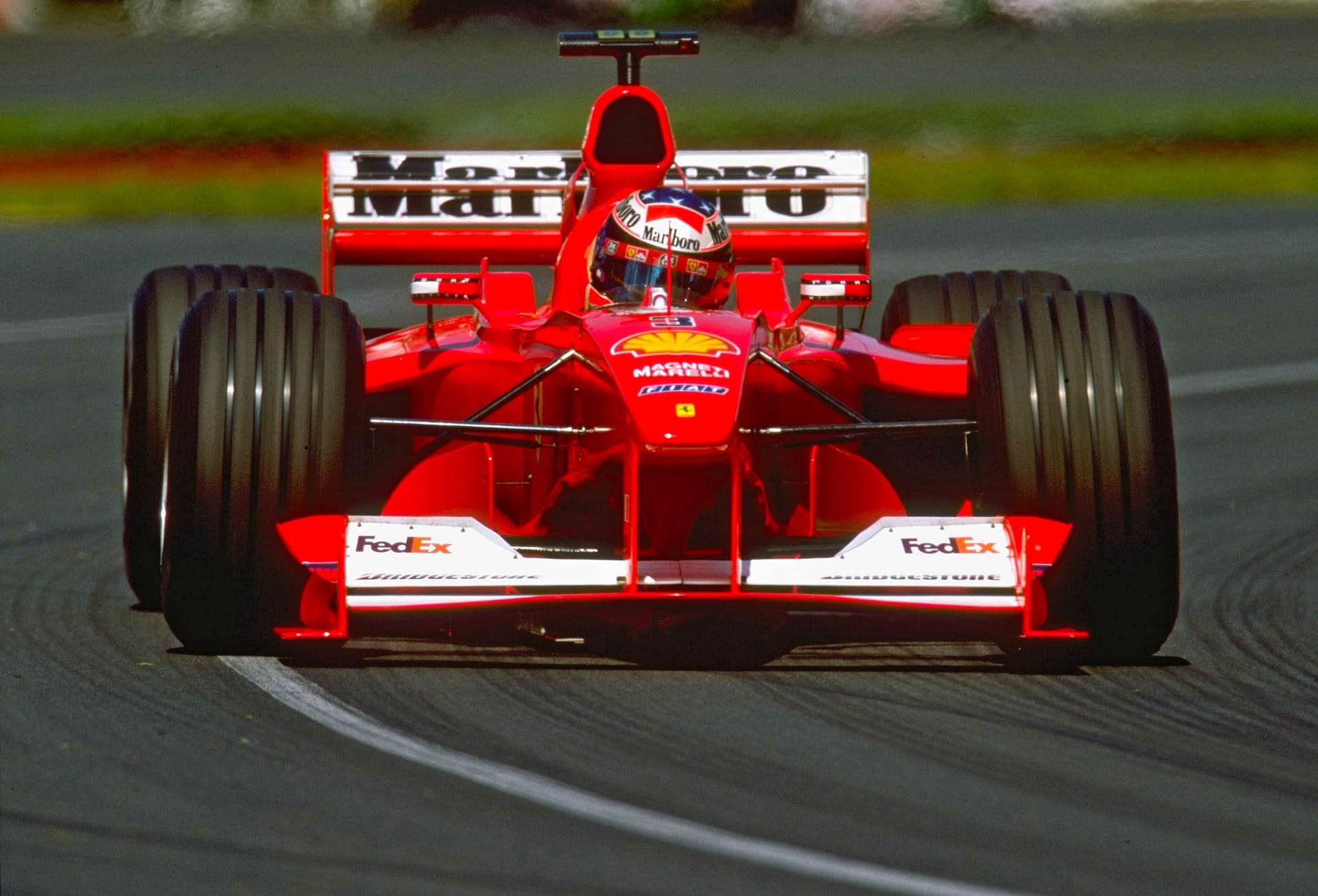
What founders can learn from Enzo Ferrari about evolving their role before growth stalls.
Most people tell Enzo Ferrari’s story as a tale of passion, speed, and relentless ambition. What often gets left out is something far more useful for founders.
He was not an exceptional driver.
He was competent. Determined. Serious about racing. But not dominant. And in a field where only the very best are remembered, being merely good is a quiet signal. It tells you that your greatest contribution may not be where you first thought.
For years, he stayed in the driver’s seat. He competed, pushed, and improved. Yet he gradually recognized a deeper truth: he was more energized by the car, the team, the preparation, and the pursuit of excellence than by driving itself.
Admitting that is difficult when your identity is tied to being the one at the wheel.
At some point, the question changed.
It stopped being “How do I win?”
and became “How do we build something that wins?”
That shift marks the beginning of Ferrari as we know it.
My time near Maranello
I spent several years living close to Maranello, a small Italian town that feels unremarkable until you understand its significance.
You quickly notice that Ferrari is not just an employer there. It is part of the collective identity. Workers, engineers, and families speak about it with a sense of personal connection. Pride is not abstract. It is lived.
Even decades after Enzo’s passing, his presence feels current. Standards remain high. Expectations remain clear. The culture has continuity.
This is not the result of marketing. It is the outcome of a founder embedding values so deeply that they outlast him.
Many founders talk about legacy in terms of valuation or brand recognition. What they are actually seeking is endurance. The ability of an organization to operate with clarity and conviction without constant founder intervention.
When the identity that built the company becomes the constraint
Here is a pattern I see repeatedly with founders and CEOs of growing companies.
The identity that carried you through the early phase does not automatically evolve as the company grows.
In the beginning, you are the problem solver, the closer, the decision maker, and often the safety net. That intensity is necessary. But if it remains unchanged, it becomes a bottleneck.
Companies reach ten or twenty people, sometimes more. Revenue grows. Complexity increases. Yet every critical decision still funnels through the founder.
Not because they want control for its own sake. Because no one ever explained that their role must change at a deeper level.
Growth without personal evolution creates friction. The organization expands, but leadership habits remain anchored at an earlier stage.
What Enzo understood
When Enzo stepped away from driving, he did not withdraw from the business. He redirected his focus toward building the system around performance.
He became deeply involved in selecting talent, refining engineering processes, shaping team culture, and preparing for competition with discipline.
He treated success as a product of preparation and alignment, not individual heroics.
The shift from “I” to “we” sounds simple, yet it fundamentally changes how decisions are made.
An “I” mindset concentrates responsibility in one person. Progress depends on their availability and energy.
A “we” mindset forces the creation of structures, capabilities, and standards that allow others to perform at a high level consistently.
This is the difference between managing activity and designing an organization.
Where founders get stuck
Many founders decide they should delegate more. They assign tasks and step back, expecting relief.
When quality dips or decisions differ from their expectations, they step back in. The conclusion becomes that the team is not ready.
More often, the issue is not capability but ownership. Tasks were handed over without clear authority or accountability. The founder remained the implicit final decision maker.
Real delegation requires transferring both responsibility and the right to decide within defined boundaries.
Otherwise, the system never matures.
Building capability instead of dependency
Enzo did not simply instruct people to perform better. He established an environment where high standards were internalized.
Expectations were clear. Feedback was direct. Excellence was not negotiable.
The goal was not to be needed at every moment, but to ensure the organization could perform at a high level consistently.
For founders, this means shifting from solving problems personally to designing conditions where problems are solved effectively without constant intervention.
What this demands from you
This transition is less about techniques and more about identity.
Moving from operator to builder requires letting go of the satisfaction that comes from being the person who fixes everything. It asks you to find meaning in shaping direction, strengthening teams, and building systems that outlast your direct involvement.
It can feel uncomfortable. Stepping back may feel like losing control. Watching others approach challenges differently can be difficult.
Yet scaling requires this shift.
The skills that created your company are not the same ones that will carry it forward.
Three reflections for founders and CEOs
- First, consider whether you are still operating as the primary executor. If you remain the best operator in the room, you may be limiting the organization’s potential.
- Second, examine whether your focus is on producing results directly or on building the mechanisms that produce results repeatedly.
- Third, reflect on how much of your identity is tied to being indispensable. Sustainable organizations are built by leaders who make themselves progressively less central to daily operations.
Enzo Ferrari began as a driver of modest distinction and became the architect of one of the most respected names in motorsport.
His impact did not come from staying behind the wheel. It came from recognizing when to step out and build something larger than himself.
For founders, the real question is not whether you can continue driving.
It is whether you are ready to build.